
Authors /
Khachatur Stepanyan,
Serob Khachatryan,
Boyana Duykovich-Blagoevich
Abstract
This report examines the state of upper secondary education (grades 10–12) in the Republic of Armenia as of 2025, identifying deep structural, content-related, and governance challenges that undermine educational quality and student outcomes. Drawing on official Armenian statistics, international assessments, and policy analyses, the report documents declining enrollment, ineffective stream-based instruction, misalignment between curricula and university entrance examinations, widespread reliance on private tutoring, textbook shortages, and serious attendance problems, particularly in grades 11 and 12. The study situates these challenges within the broader context of Armenia’s transition to a 12-year compulsory education system and evaluates the limited success of the separate upper secondary school model introduced in 2008. To inform reform, the report presents a comparative analysis of Estonia’s post-Soviet education transformation, highlighting the roles of teacher autonomy, competency-based curricula, digital investment, and systemic coherence. Based on this comparison, the report proposes a set of evidence-based reforms aimed at restoring the relevance, equity, and effectiveness of Armenia’s upper secondary education system.
Introduction and a Brief Overview of the Upper Secondary School System of the Republic of Armenia (2008 Program)
The report presents the situation of Armenia’s upper secondary schools (grades 10–12) as of 2025. It includes the following topics: the strategic program of upper secondary schools, competition between upper secondary schools and colleges, accessibility of upper secondary schools, structure of upper secondary schools, and content of upper secondary education.
This analysis is based on: Information from the Ministry of Education, Science, Culture and Sports of the Republic of Armenia (MESCS); Indicators from the Statistical Committee of Armenia; Reports of international organizations (UNICEF, World Bank, OECD, etc.); Public analyses and media materials related to education reforms in Armenia
1. Structure of Secondary Education in the Republic of Armenia and the Place of Upper Secondary School
Three-Level Education
In Armenia, secondary education is tri-level and consists of the following stages:
- Primary school – grades 1–4 (ages 6-10)
- Lower secondary school – grades 5-9 (approximately ages 10-15)
- Upper secondary school – grades 10-12 (approximately ages 16-18)
From the Soviet 10-year model, Armenia transitioned to an 11-year education system, and in the 2006-2007 academic year began transitioning to a 12-year general education system. One of the primary objectives of transitioning to a 12-year education system in Armenia was to alleviate the overload in school curricula. By moving to a 12-year system, the goal was to reduce curriculum overload. Another goal was that, after joining the Bologna Process in 2005, Armenia decided to adopt the 12-year education model accepted in Europe, so that Armenian school diplomas would be more easily recognized in the European Education Area. Until 2017, a 9-year education was compulsory in Armenia. Since 2017, Armenia has transitioned to a compulsory 12-year education system.
Upper secondary education in Armenia is implemented in several formats:
- In secondary schools (grades 1-12). These schools mainly operate in rural settlements.
- In separate upper secondary schools (grades 10-12). Upper secondary schools primarily operate in urban areas. Separate upper secondary schools also exist in several villages. These schools were established in the 2008–2009 academic year.
- In educational complexes, lyceums, and private schools. Educational complexes offer both preschool and primary education, and in some cases, also secondary vocational education. A significant portion of lyceums operate in affiliation with universities.
- In colleges. Colleges offer vocational education based on completion of both grade 9 and grade 12.
2. Establishment of Separate Upper Secondary Schools
By a decision of the Government of the Republic of Armenia on March 27, 2008, the “Strategic and Pilot Program for the Establishment of the Upper Secondary School System” was adopted.
The program identified the following problems:
- The existing curriculum lacked sufficient flexibility, limiting students’ choice opportunities.
- School education and university entrance examination requirements did not align
- The professional qualifications of teachers teaching in upper grades were insufficient.
- The small number of students in the upper grades of some schools did not ensure a diverse range of educational programs.
- Funding for different levels of schooling was the same, although upper secondary education required more resources.
According to the program, the main objectives of the reform were to improve the quality of education in upper secondary school, create opportunities for students’ professional orientation and selection of preliminary vocational education, and improve the institutional system.
The mission of the upper secondary school was to ensure students’ preparedness for independent life and provide opportunities for vocational education that correspond to their interests and abilities.
Educational Program
The proposed program envisioned the creation of a three-year upper secondary school (grades 10–12) with streamed instruction. The streams were classified into four groups: core (natural sciences, humanities, vocational), additional (arts, sports, military), sub-streams, and general.
The curriculum comprised 3,468 instructional hours over a three-year period. Subjects were divided into three groups: specialized (stream-based), general education, and additional. The distribution of instructional hours byvaried to grade, gradually increasing the role of specialized subjects: in grade 10, 27/62/11%; in grade 11, 44.5/44.5/11%; and in grade 12, 71/18/11%.
The minimum weekly workload was 30 hours, with a maximum of 34 hours.
Institutional System
Separate upper secondary schools were to be established based on existing schools and lyceums. In settlements with only one secondary school, the school continued operating under the previous system, implementing the general stream program. In settlements with multiple schools, educational complexes, or separate upper secondary schools with specialized stream programs were formed.
The selection of schools was based on geographic location, building condition, educational resources, staff preparedness, and involvement in reforms.
Organization of the Educational Process
Admissions were conducted based on applications from graduates of basic schools in July and August. In core stream schools, admission was unrestricted, while in schools of national significance, a competitive selection process was organized. Students were able to change streams within the first 1.5 years of enrollment. End-of-year examinations were administered, and only students with satisfactory academic progress were allowed to advance to the next grade.
A five-day school week with an eight-hour school day was established.
Classes were organized in different group sizes: 12–15 students for specialized subjects and 25–30 students for general education subjects.
Funding would be based on a per-student formula. A minimum 20% salary increase for pedagogical staff compared to basic schools was envisaged. It was anticipated that under these conditions, even university lecturers would be willing to work in upper secondary schools. Investment expenditures for newly established schools would be implemented for renovation and equipment procurement.
Pilot Phase
The pilot phase of the program began on April 1, 2008. Approximately 30 pilot schools were selected in several regions. During the preparatory phase (April–August 2008), renovation, furnishing, teacher selection, and training activities were carried out.
Part I – Problems of Upper Secondary Schools in the Republic of Armenia (2025)
Statistical Data
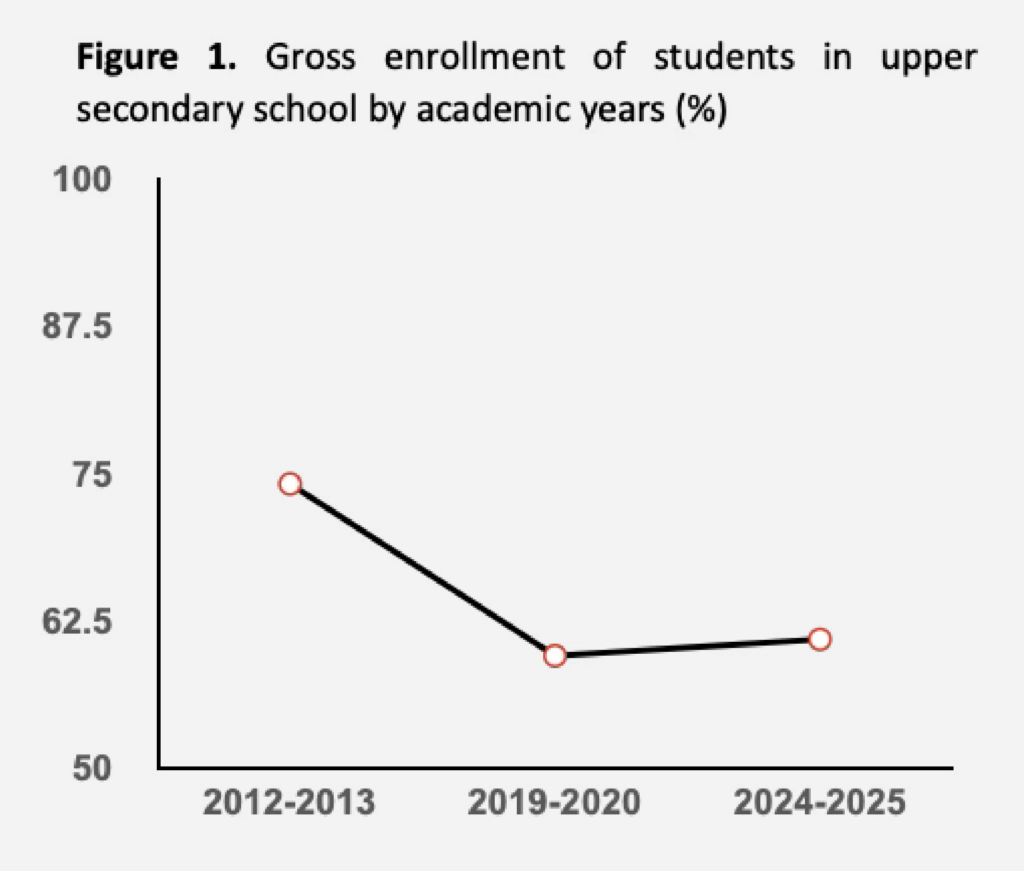
Gross enrollment in upper secondary schools has significantly decreased. In the 2012–2013 academic year, the rate was 74.1%; in 2019–2020, 59.5%; and in 2024–2025, 60.9% (Figure 1). This decline is attributed to the introduction of compulsory 12-year education in Armenia, which began in 2017, toleading in an increase in students dropping out of school. Another factor is the increase in the number of college applicants in recent years.
In the 2012–2013 academic year, 13.4% of Armenian students attended upper secondary schools; in 2019–2020, this figure decreased to 7.7%, and in 2024–2025, it increased to 8.3%.
In Armenia, 107 separate upper secondary schools were established, of which 97 are operating in 2025. The remaining 10 schools were closed due to under-enrollment. It can be stated that the program for separate upper secondary schools largely failed. Below are several indicators of this failure.
Competition Between Upper Secondary Schools and Colleges
One reason for the failure of upper secondary schools is that, in many respects, they found themselves in unfair competition with colleges. In particular, college graduates were granted the privilege of continuing their studies directly in the second year of part-time university programs. Although this privilege was later restricted, it nevertheless had a negative impact on upper secondary schools, as many students preferred to continue their education in colleges.
Another difference is that colleges award professional qualifications to their graduates, whereas upper secondary school graduates receive only a diploma. Additionally, many specialties offer professional preparation through colleges. For example, in fields such as medicine, information technology, economics, agriculture, law, and others, colleges provide a professional foundation that helps graduates enter the workforce better prepared.
All this led to a situation in which most of the best graduates of basic schools preferred to continue their education in colleges, which negatively affected academic performance in upper secondary schools. Whereas previously around 15% of grade-9 graduates continued to college, by 2024 this figure exceeded 30%. As a result, upper secondary schools continue to close in Armenia, and in some cases, student numbers are very small.
Accessibility of Upper Secondary Schools
More than 90% of separate upper secondary schools operate in urban settlements, which significantly disadvantages rural students who are deprived of the opportunity to receive stream-based education. Students in upper secondary schools, unlike those in secondary schools, have access to stream-based education, allowing certain subjects to be studied in greater depth.
The establishment of upper secondary schools created accessibility problems in many small towns. In those towns, one or two upper secondary schools operated, often located far from students’ residences.
Structure of Upper Secondary Schools
The upper secondary school program envisioned the creation of streams and substreams intended to provide pre-professional preparation for students. However, the sub-stream system essentially did not function. In many schools, students wished to study in economics streams or sub-streams, but in many upper secondary schools, such streams were not formed. The same occurred with natural science streams. Students wishing to study medicine often chose physics and mathematics streams because their school did not offer a biochemistry stream.
There were also problems with general streams. These often-included students with very low academic performance, whereas the purpose of the general stream is to provide a well-rounded education. The creation of vocational streams also failed. Only a few upper secondary schools managed to form vocational streams, as their creation required substantial material and technical resources. The creation of sports streams also failed.
The failure of stream-based education is recorded in the Education Development Program up to 2030, which states: “In rural settlements, children were deprived of equal opportunities for professional orientation and education at the upper secondary level prior to the adoption and implementation of the new state standard of general education, as stream-based instruction was not implemented in secondary schools. In addition, the effectiveness of stream-based instruction is problematic, as external assessment results in schools show that they are not always correlated with students’ stream choices. Thus, students in humanities streams achieved higher results in biology, and students in natural science streams achieved higher results in foreign languages.”
Content of Upper Secondary Education
One of the main failures of upper secondary schools was in the content they offered. Although not officially documented, numerous studies and observations suggest that many Armenian students resort to private, paid tutoring to gain university admission. This problem has not been resolved. Moreover, whereas university applicants previously engaged in tutoring for 1–2 years, today, some students begin private tutoring much earlier.
The State Education Development Program up to 2030 states: “Despite the formation of a three-year upper secondary school system (grades 10–12) as a continuation of basic general education, upper secondary school still fails to ensure adequate pre-professional knowledge and skills among students. Very often, upper secondary students incur additional expenses to enter university.”
According to the Household Living Conditions Survey of Armenia, in 2018, among households with children studying in upper grades, the share of monthly education expenditures allocated to private tutoring was 38.7% for non-poor families, 12.7% for poor families (excluding extremely poor), and 0% for extremely poor families. Comparing the number of university entrants and upper secondary school graduates (approximately 60% of graduates enter university), it can be concluded that about 60% of students at the upper secondary level are involved in the paid educational services market. These data show that extremely poor children are deprived of the opportunity to receive private tutoring, making them non-competitive.
Currently, there are serious problems related to upper secondary school textbooks. For two years, there have been no grade-10 textbooks for Armenian History, Chemistry, or Biology. This year, textbooks for these subjects are also absent for grade 11. There is also no grade-11 textbook for Natural Sciences. In the case of Chemistry and Biology, it is possible to use old textbooks, but the upper secondary Armenian History standard has changed so significantly that old textbooks cannot be used. The Ministry provides teachers with modules for conducting lessons. In many cases, the cost of printing these modules falls on students, and in some cases, students use electronic versions downloaded to their phones.
The renaming of the subject ‘Armenian History’ to ‘History of Armenia’ is also problematic. Although the overwhelming majority of specialists opposed this decision, it was nevertheless adopted.
Quality of Education
The results of upper secondary graduation examinations are also concerning. According to the Assessment and Testing Center’s publication for the 2022–2023 academic year, the following average scores were recorded during grade-12 graduation examinations:
| Subject | Average Score |
|---|---|
| Armenian Language and Literature | 12.94 (out of 20) |
| Armenian History | 13.43 (out of 20) |
| Mathematics | 13.51 (out of 20) |
In the same year, the Assessment and Testing Center conducted assessments among grade 12 students in Armenian Language and Algebra to test residual knowledge based on the grade 11 curriculum. More than 1,200 grade-12 students participated. The results were as follows:
| Subject | Number of Participants | Average Grade |
|---|---|---|
| Armenian Language | 1248 | 5.04 (out of 10) |
| Algebra | 1208 | 4.54 (out of 10) |
The table shows that the indicators are quite low and close to the minimum passing score (4). The results were also differentiated by school type:
| Subject | Average score of upper secondary school students | Average score of secondary school students |
|---|---|---|
| Armenian Language | 5.12 | 5.01 |
| Algebra | 4.66 | 4.47 |
The differences are small, even though students in upper secondary schools study some subjects in greater depth than those in secondary schools.
Enrollment Problems in Upper Secondary Schools
According to the 2025 report “Enrollment in the Compulsory Education System” by the Audit Chamber, the two main points at which students exit compulsory education are failure to enroll in first grade on time and failure to transition from lower secondary to upper secondary school. Accordingly, targeted interventions can be planned and implemented in these two directions, separate from general measures.”
According to the same report, approximately 76% of children who were enrolled in the education system and then dropped out of compulsory education are students in grades 9 and 10. Therefore, early warning measures are needed for individuals at risk of dropping out of compulsory education (where risk is understood broadly, based on aggregated indicators beyond six consecutive absences as defined by regulation) to ensure an effective transition from lower secondary to upper secondary school.
The enrollment rate is particularly low at the third level of secondary education, upper secondary school, where it was 60.9% in 2024. In the 2024–2025 academic year, approximately 39,000 students who completed basic school continued their studies in upper secondary and secondary schools, 12,630 enrolled in colleges, and approximately 2,500 did not continue their education at all, despite a 12-year education being compulsory by law.
One of the primary issues in upper secondary school is attendance. Particularly serious attendance problems exist in grade 12. Some upper secondary students work, while others attend private tutoring at the expense of school attendance. Essentially, instruction in grades 11 and 12 is ineffective.
The situation worsened when the Ministry of Education allowed applicants to take university entrance exams in January. As a result, many grade-12 students successfully pass entrance exams in January, after which attending school becomes unnecessary for them. It becomes extremely difficult for school principals and homeroom teachers to combat absenteeism. Absenteeism and disengagement in grades 11 and 12 also negatively affect first-year university students, as approximately two years of irregular attendance and ineffective instruction undermine students’ learning culture.
Upper Secondary Schools After the Introduction of the New State Standard of General Education
In 2021, the Government of the Republic of Armenia approved the State Standard of General Education. Subsequently, subject standards and curricula were approved. The introduction of the new standards in upper secondary schools was scheduled to begin in 2023 in grade 10, but was implemented one year later. Currently, the standards apply in grades 10–11, and they will be implemented in grade 12 next year.
According to the new standards, schools introduce individualized learning, enabling students to select specific subjects. A positive aspect of this approach is that not only students at separate upper secondary schools but also students at secondary schools gain the opportunity to study according to their interests. In this regard, targeted learning has been introduced, enabling in-depth study of Algebra, Physics, and English. A credit system will also be introduced, allowing upper secondary students to be exempted from certain university courses. Although students following the new standards will graduate in grade 12 in one year, it remains unclear how the credit system will operate. It is also unclear what changes will be made to the university entrance examination system. The absence of textbooks for certain subjects also creates uncertainty for applicants.
Under the new standard, project-based learning has become mandatory in grades 7 through 12. Initially, it was planned that each student would complete at least one project per year. However, starting this year, students must complete at least 2 projects per semester, one of which must be in a STEM subject. Such a workload in upper secondary school may create problems for both students and teachers. Since student groups cannot exceed seven members, this will result in a heavy workload for STEM teachers in project-based learning.
The most concerning issue is that the implementation of the new standard is unlikely to introduce significant changes at this level regarding attendance and the content’s attractiveness.
Conclusions
Thus, the establishment of separate upper secondary schools and the introduction of compulsory 12-year education have not improved educational attainment.
- Serious attendance problems exist, particularly in grades 11–12. If a significant number of students do not attend classes regularly, it is meaningless to discuss the quality of education.
- A significant portion of high-achieving grade 9 students enroll in colleges, where competition is intense. A significant portion of low-achieving grade 9 graduates fail to pass the college entrance competition and are forced to continue their studies in upper secondary schools. This negatively affects upper secondary schools, turning them into institutions enrolling students with weak academic performance.
- Gross enrollment in upper secondary schools has declined. The number of students dropping out of compulsory education has increased at the upper secondary level.
- Several textbooks are missing, and students teach using modules or older textbooks, which fosters negative attitudes toward learning.
- Uncertainty remains regarding the content and format of university entrance examinations. In 2027, students studying under the new standard will graduate, but many uncertainties remain.
Part 2 – Estonia’s Educational Success Model
Education in Estonia
Following the collapse of communist rule in 1991, the Soviet government recognized Estonia as an independent state. In this paper, we provide an overview of Estonia’s education system since the late 1990s. The subject of this analysis will be the development and evolution of the education system from its traditional Soviet roots to its modern form, which is currently among the best in Europe and the rest of the world.
According to Eurostat, Estonia’s population was 1,374,000 in 2024. In the 2024/25 school year, 165,000 students were enrolled in basic and upper secondary schools in Estonia. At the same time, the number of teachers in general education schools was around 17,500. In the school year 2023/24 school year in Estonia, there were 510 schools for general education (46 fewer than a decade ago). School education in Estonia is mostly financed by the public sector (state and local authorities). Funding is secured for operational costs (including teachers, staff, and running expenses), as well as for infrastructure and tertiary (research and development) spending. According to the OECD, Estonia invests 4.5% of its GDP in education, which is similar to the OECD average of 4.7%.
Estonian Education System
In Estonia, the education system is comprehensive, with a primary focus on providing the best education for all students, regardless of background. Pre-school education – age group from 18 months to 7 years.
Pre-school Education
Pre-school education is provided to children from 18 months to 7 years in specially dedicated educational institutions. According to the recent data, 94% of Estonian children aged 4 to 7 are enrolled in pre-school education. This type of education is not only a daycare. Rather, it is part of learning with curriculum and methodological activities.
Local governments are responsible for organizing kindergarten. It is possible to replace kindergarten with a private childcare service if the child is younger than 4. In municipal kindergartens, parents pay a small tuition fee, while in private institutions, the cost can be much higher. Most children attend daycare at age 2, since paid maternity leave in Estonia is 18 months.
In general, key features of Estonian pre-school education include very high participation, highly trained staff, and strong connections and continuations to basic education. All of this contributes to reducing the socio-economic gap and correlates with high-quality early learning experiences, which lead to better outcomes later on, and this is a likely contributor to Programme for International Student Assessment (PISA) success.
Basic Education
Compulsory education in Estonia lasts from grades 1 to 9. Parents can select a school for their children. Every child has a right to receive an education in nearby places. The principles of inclusive schooling are implemented, meaning that students with special educational needs typically study in an ordinary classroom within their school.
Basic education in Estonia is divided into three stages: Stage One – grades 1 to 3, Stage Two – grades 4 to 6, and Stage Three – grades 7 to 9. The curriculum emphasizes balanced development (mental, physical, moral, social, and emotional). Also, great emphasis is placed on respecting core values (honesty, democracy and respect, solidarity, and environmental sustainability). Schools bear a responsibility to develop a student’s key competences – communication, learning to learn, social competences, cultural awareness, entrepreneurship, and digital competencies.
The curricula are organized around ‘subject fields’, and for basic education, they are:
- language and literature (Estonian or Russian, depending on instructions),
- foreign languages,
- mathematics,
- natural sciences,
- social studies,
- art,
- technology,
- physical education and
- optional subjects (elective subjects like religion, informatics, and career education).
Additionally, schools are required to incorporate cross-curricular topics across various academic disciplines. This may include sustainable development, entrepreneurship, lifelong learning, digital literacy, and other topics important to the local community. Schools can choose topics, the number of lessons per week, and how to integrate cross-curricular topics, among other options. Also, stakeholders (teachers, parents, and school board members) must be included in the drafting of the curricula.
Graduating from the basic school requires that students learn the curriculum at least at a satisfactory level, together with passing three basic school graduation exams, consisting of the Estonian language, mathematics, and an exam on a subject of the student’s choice, as well as completing a creative assignment.
General Secondary Education
General secondary education is acquired at the upper secondary school level. Upper secondary schools are designed to help students become creative, multi-talented, socially mature, and reliable citizens. The curriculum comprises general sections (values, competencies, learning environment, and assessment) and appendices that include subject-specific syllabuses, cross-curricular topics, and optional courses. The aim of this part of education is to prepare students to act as responsible citizens. The curricula define the core competencies students should develop in upper secondary education. Studies are organized in ‘courses’. Students should complete 96 courses (a combination of mandatory and elective) to graduate and pass ‘state exams’ in Estonian (or Estonian as a second language), mathematics, and a foreign language. Additionally, the students must complete research work or a practical assignment as well as pass the school examination of an upper secondary school. Attending the general secondary education entitles students to continue their studies at a higher educational institution.
As with basic education, schools are free to develop their own local curricula. This freedom and flexibility allow schools to adapt to local needs and contexts. Estonian upper secondary education is competence-based. Students are not required only to ‘memorize’ facts; rather, according to the graduation requirements, they are obliged to apply the knowledge in creative, cross-disciplinary work, promoting deeper thinking and application.
Vocational education fosters knowledge, skills, and attitudes, as well as occupational know-how and social readiness, required for working, participating in social life, and engaging in lifelong learning. Vocational education is free and can be obtained after basic school as vocational secondary education (lasting 3-4 years) or as vocational skills training (lasting 3 months to 2.5 years), without general education.
There are close collaborations with companies in curriculum development and in creating apprenticeship opportunities. Moving between vocational education and higher education, and vice versa, is becoming increasingly popular.
The Estonian journey. What has Estonia done to change its education system
Back in 1991, after regaining its independence, Estonia had the old Soviet education system in place. In the early 1990s, Estonia began replacing the old Soviet educational structures across its institutions. Core efforts focused on reintroducing Estonian as the primary language of instruction in schools. The 1992 Educational Act has been in place, marking the first step in establishing the basis for the organization and governance of education in the independent state. By this act, compulsory basic education (nine years), school autonomy, and state oversight on education have been established. This is still the core legal framework in education in Estonia.
In Estonia during the 1990s, significant progress was made in the education sector. This period is significant and marked by the first shift for rapid transition. The foundation for Estonian success 20 years later was laid in the early 1990s – a major shift in the curriculum and in Information and Communications Technology (ICT) investment.
The legal framework was already in place, and implementation was underway.
The primary objective of the early stages of reform was to ‘de-ideologize’ education and lay the groundwork for the national education system. Besides the Education Act, this process involved the creation of a new curriculum, the development of textbooks, and the retraining of teachers. In addition to the other measures introduced during this period, two pillars stand out as the most significant: curriculum reform and substantial investments in school ICT.
Curricula – the education system was shifted towards competence-based learning and outcomes, emphasizing transferable skills, democratic citizenship, and school-level curriculum flexibility. Training sessions have been organized for teachers and school leaders, and new skills needed for the new responsibility – developing local curricula within the national framework- were developed. Universities provided the necessary guidance and support, ensuring the participation of all key stakeholders. “The new national curriculum, accepted by Parliament in 1996, focused on outputs. It described competencies, or standards, to be achieved at the end of each school stage and provided guidance about how to organize a student-centered learning process in school. In 2011, the national curriculum was separated into two frameworks: one for lower secondary and one for upper secondary. Each framework enabled schools to develop their own curricula, while taking students’ interests and regional cultural differences into account.”
To ensure the best possible and transferable implementation of curricula, centrally administered assessments and examinations were established in the mid-1990s. The autonomy granted to schools in the early 1990s also had an impact. The 1990s are marked by decentralizing processes, in which local municipalities gained significant responsibility for planning and organizing the quality of education. School headmasters have autonomy in choosing personnel, controlling the school budget. Teachers are free to choose study materials.
ICT development – the Tiger Leap – this was a large-scale, nationally coordinated investment in ICT for schools. Networking, ICT labs for schools, and teacher training in digital skills were key to later achievements in digital education and innovation. Here are the foundations for scaling digital literacy in Estonia. The Tiger Leap national program was launched in 1996 by President Lennart Meri. A year later, computer companies and private individuals established the Tiger Leap Foundation with the primary goal of equipping Estonian teachers with basic computer skills and connecting the Estonian education system to international information databases. The Tiger Leap program also helped to improve co-operation between the state, schools, and service providers. This program continues today, focusing on building skills in three areas: design and technology, engineering sciences, and information and communication technologies.
The measures taken in the 1990s enabled the establishment of a new educational system in Estonia. New curricula, digital transformation, and a large scale of autonomy (which led to the responsibility for the end results being shared by all key stakeholders in education) have influenced the orientation of education to fulfill the needs of the economy, which was also undergoing transition. Strong emphasis on teacher education, incorporation of innovative practices, mentorship, and a required master’s degree for teachers.
The 2000s have been marked by a process of alignment with European frameworks and quality assurance. Estonia implemented quality assurance systems in schools and aligned higher education with the Bologna process. Teacher education has been strengthened. Additionally, VET education, as well as adult learning, received considerable attention. The curriculum was revised twice, in 2002 and in 2011.
The 2002 curricula shifted the Estonian education system more towards an outcome-oriented approach. Competence development was given a stronger role, and content was reduced. More space was given to cross-cutting skills, and teachers had more time to work on skills development (problem solving, communication, self-regulated learning. In short, ‘Less what to cover prescribed, more focus on what learners should be able to do’. In this curriculum, transdisciplinary / cross-curricular topics have been promoted, and a learner-centered educational approach has been given a stronger role. The aim was to link subjects learned in schools with real-world competencies.
A new curriculum revision in 2011 brought a change when subjects were replaced by broader subject fields, as part of efforts to better integrate learning in key areas. All three versions of the curricula (1996, 2002, and 2011) have employed a competency-based approach, defining learning outcomes in subject fields at various levels. The national curriculum applies to all general education schools, whether state, municipal, or private. Thus, all students must meet the same standards to graduate from school. Graduation requirements for basic and upper secondary school are based on the national curriculum of 2011, which aligns with the Estonian Qualification Framework, in turn aligning with the European Qualification Framework.
The table below summarizes the process of national curriculum development in Estonia.
| Before 1991 | Content-based curriculum |
|---|---|
| 1991 – 1996 | Transformation period |
| 1996 | Releasing the first Estonian curriculum withGeneral and subject competenciesSocial constructivist approach to learning |
| 2002 | More decision-making authority given to schoolsMore subject integrationModified cross-curricular topics |
| 2010 | Separated primary and upper-secondary curriculumModified and extended general competencesSubject fields created |
| 2011 | Decreased and renewed contentModified general competencies, including digital competenceModified learning outcomes for subject fields |
| 2014 | New LLL strategy |
| 2023 | Updated curricula for general education. Based on the revised national curricula, schools will modify their curricula to support the implementation of a contemporary approach to learning. Indicative descriptions of learning processes have been prepared to support teachers in their work. |
Importance of Education – The Estonian case
According to international research findings on the Estonian education system, as noted in the 2020 OECD Education Policy Outlook, Estonia continued to outperform other countries in overall PISA performance in 2018. That year, Estonian students were among the top performers in all three domains assessed. Performance in reading and mathematics has increased steadily since Estonia’s first participation in PISA in 2006. Participation in early childhood education and care has also increased over time; enrolment rates for 3-year-olds are above the OECD average. Upper secondary and tertiary attainment rates are also above the OECD average, and tertiary attainment rates have increased in recent years. Adults in Estonia outperformed the OECD average in literacy and numeracy, as measured by the OECD Survey of Adult Skills (PIAAC) in 2012.
Regarding the institution’s performance, Estonia has made significant efforts in recent years to strengthen digital skills and inclusive education among teachers, as well as to increase their wages. In TALIS 2018, the share of teachers who felt their profession was valued in society had almost doubled since TALIS 2013. The disciplinary climate in schools, as reported by students in PISA 2018, is also among the most favorable in the OECD, and has increased across PISA cycles. Estonia has comprehensive procedures for system-level evaluation, drawing on data from external and internal evaluations at different levels of the system.
In Estonia, schools have a large degree of autonomy. The state establishes national standards and sets principles for education funding, state supervision, and quality assessment. While most pre-primary and general schools are owned and run by the municipalities, most vocational schools are state-owned. Overall expenditure on education (measured as a share of gross domestic product (GDP) or per student in USD) is relatively low compared to other OECD countries.
While Estonia’s performance and equity levels in PISA 2018 were among the highest in the OECD, some gaps in learning opportunities persisted and need to be addressed. Estonia also needs to continue strategically developing the supply of skills in the labor market, for example, by developing up-to-date skills, including those for digital transformation. Increasing the attractiveness of vocational education and training (VET) to graduates from compulsory education will involve raising students’ awareness of the opportunities the VET offers, as well as ensuring more successful transitions from initial VET. To improve completion in higher education, Estonia could consider reducing the cost of part-time study, as this may be more suitable for some students. At the school level, with an ageing teaching workforce, attracting qualified candidates to the profession would be a priority for the future. Estonia has made numerous efforts to consolidate its school network amid demographic change; however, progress has been uneven across municipalities. Ensuring continued funding for activities currently supported by EU funding and increasing private non-household funding in higher education are also key issues.
According to the TALIS report for 2024, Estonia is facing an aging workforce (a very well-known problem in many OECD countries). On average, Estonian teachers are 49 years old (compared to the OECD average of 45). Teachers’ autonomy is very high, and this is one of the education system’s most valuable strengths. Teachers are involved in decision-making. Initial professional teacher development is highly regarded. Some 91% of recent graduates are very satisfied with the quality of their initial education (OECD average is 75%). This is not the case with continuing teachers’ development (in-service training), as it is hindered by constraints such as time, cost, and scheduling. However, 51% (compared to the OECD average of 55%) of teachers report that the professional learning activities they participated in during the 12 months preceding the survey had a positive impact on their teaching. According to the findings, teachers most commonly report high levels of professional learning in teaching students with special education needs, classroom management for student behavior, and technical skills for using digital resources and tools. Teachers are reporting high levels of stress, especially related to student outcomes and demands for inclusion, and younger teachers are particularly at risk of leaving. There is growing use of AI in teaching, but knowledge gaps and infrastructure limitations remain.
One important element of Estonia’s education system is teachers’ autonomy. “Compared to the OECD average, teachers in Estonia report greater instructional autonomy and principals indicate stronger teacher involvement in school-level decision-making on curriculum, instruction, and other school policies… Teacher appraisal not only serves a formative role by supporting professional growth, but also a summative role by assessing effectiveness and ensuring accountability.”
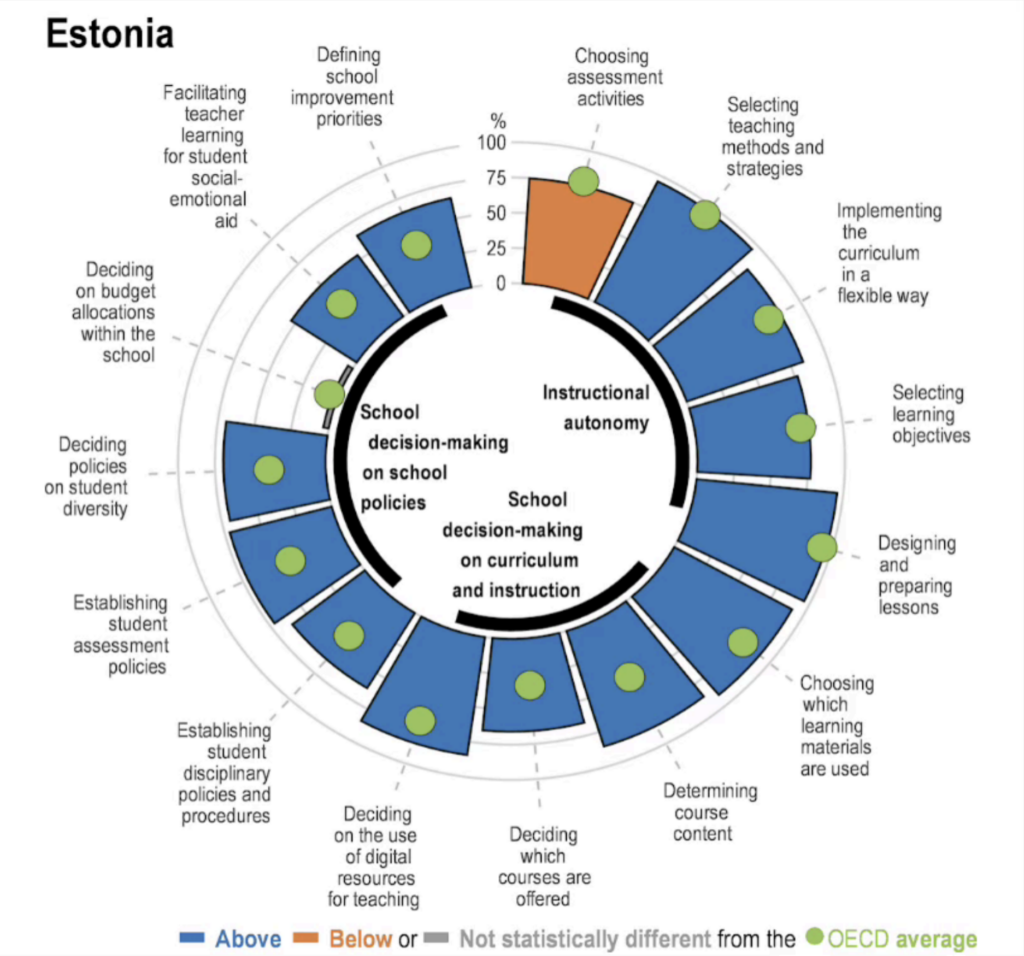
Figure 2. Teacher decision-making in the Estonian education system. Figure 2 indicates the teacher’s decision-making authority. Why is this important? How does the high degree of centralization and school autonomy influence the education system’s high international scores? Local authorities (school owners) and schools have considerable control, while the state focuses on setting standards, conducting quality assessments, and providing funding. This autonomy enables schools and teachers to tailor national frameworks to local contexts, thereby supporting innovation in teaching and better addressing student needs.
Autonomy is strongly linked to adaptive teaching practices: teachers with more instructional autonomy are more likely to tailor lessons to students’ prior knowledge, change explanations when students struggle, and adjust their teaching methods. Such adaptive teaching is critical for high performance, as it allows for personalizing and differentiating instruction, which helps maintain high achievement across diverse student populations.
It is likely that a motivated and confident teaching workforce contributes to effective teaching and stable quality, which, in turn, supports strong student outcomes, as measured in PISA.
Commentators and policy analysts note that the “recipe” for Estonia’s success includes trust in teachers: the state sets learning goals, but teachers decide how to reach them. When teachers are treated as professionals, they are more likely to innovate, take ownership, and feel invested — which benefits student learning outcomes.
If we take a look at the PISA 2022 report, it is highlighted that „In Estonia, 94% of students attended a school where principals had the main responsibility for hiring teachers (OECD average: 60%), and 97% were enrolled in a school where teachers had the main responsibility for choosing which learning materials are used (OECD average: 76%). Many high-performing school systems tend to entrust principals and teachers with these responsibilities…. Teacher and school autonomy in Estonia, when combined with rigorous national standards, strong initial teacher education, and accountability/data systems, acts as a significant enabler of high and equitable student outcomes, as measured by PISA. Autonomy contributes through adaptive instruction, teacher ownership, and rapid local innovation. However, its benefits rely on sustaining teacher professionalism, support systems, and workforce renewal”.
The Way Forward
In recent years, Estonia has announced major changes to its education system. The Education Strategy 2021 – 2035 is setting the way forward for Estonian education. In 2022, the Estonian parliament adopted amendments to relevant legislation to make Estonian the main language of instruction in kindergartens and schools. According to the plan, by 2030, Russian will be a ‘foreign language’ in Estonia. Russian is the lingua franca in this part of Europe, and a significant percentage of the population speaks Russian as their native language. This will be one of the biggest reforms in education in Estonia, and the government envisages an additional 300 million Euros from the state budget over the next four years, with an additional 46 million Euros provided by the EU Structural Funds. What is the rationale behind this, to some extent a political decision, was explained by Minister of Education, Kristina Kallas: “For a long time, there was a lack of political assertiveness because there were strong Russian attempts to interfere. In a way – very tragically – the Russian aggression against Ukraine was the decisive element in breaking down the resistance to this school reform. My great concern is that a separate Russian-language education system will negatively impact Russian-speaking children. This totally separate, parallel education system has resulted in Russian-speaking children being completely excluded from Estonian further education opportunities after graduating from these (Russian) schools, and this also applies to the job market. Thus, we must reform this school system and provide equal access to coursework taught in Estonian….For the generation born after Estonia regained its independence, it is essential that they perceive themselves as Estonians and identify with the Estonian nationality, without having to relinquish their sense of being Russian. These identities are not mutually exclusive.”
The Estonian education system has undergone tremendous changes over the last 30 years. A lot has been done, and the good results of joint effort – the policy makers, teachers, and students are clear. Estonia is among top top-ranked countries in recent PISA testing.
However, although great results are evident, there are also ‘worrying signs’ on the horizon.
Among the greatest threats is the shortage of qualified STEM teachers. This may pose a significant threat to the long-term sustainability of their educational excellence. According to TALIS 2024, only 35% of novice teachers reported that teaching was their first career choice.
The transition to the Estonian language as the primary language of instruction also poses some risks. While the reform pursues national-language unification and social integration goals, it carries a real risk of lowering the quality and fairness of education for minority-language students, unless the transition is carefully managed with adequate support.
Despite overall strong national results, individual schools may offer a significantly different quality of education, which can impact equal opportunity and social mobility, particularly for rural or minority populations. The decentralized structure of Estonia’s education system grants municipalities and schools autonomy, which can lead to an uneven distribution of resources. Some smaller or rural schools struggle to find qualified teachers or offer a broad curriculum. This might lead to inequality.
In the end, considering that Estonia restored its independence only 35 years ago and the shifts made in the education system, as well as the results achieved, in many respects, it can serve as a learning example for societies working to reform education. In the rapidly evolving world of technology, the economy, social life, and politics, it is of utmost importance to create a resilient and competent system that can effectively respond to societal needs.
Part 3 – Comparison and Proposed Solutions
As of 2025, Armenia’s upper secondary education system is at a critical juncture. While the 2008 reforms aimed to modernize the system, they ultimately led to structural fragmentation and a decline in educational equity. In contrast, Estonia’s successful transition from a Soviet-style model to a global leader in PISA rankings offers a replicable blueprint for systemic transformation.
1. Pedagogical Pivot: From Rote Learning to Competence
The core failure of the Armenian system is a misalignment between classroom content and the cognitive demands of the modern world.
- The Armenian Crisis: A staggering 60% of upper secondary graduates rely on private tutoring to bridge the gap between school curricula and university entrance exams. Residual knowledge assessments indicate that students barely achieve passing marks in core subjects, such as Algebra (4.54/10).
- The Estonian Lesson: Since 1996, Estonia has employed a “social constructivist approach,” transitioning from a “content-based” to a “competence-based” learning model. They operate on the principle of “Minimum knowledge, maximum action” to prioritize logic over memorization.
- Proposed Solutions:
- PISA-Aligned Assessments: Reform university entrance examinations to test the application of knowledge rather than the reproduction of facts.
- Academic De-loading: Explicitly remove redundant theoretical material from the state standard to allow for in-depth specialization during school hours, reducing the financial burden of private tutoring on families.
2. Institutional Governance: Centralized Rigidity vs. Professional Autonomy
Armenia’s centralized model has prevented schools from adapting to local socio-economic realities, particularly in rural areas.
- The Armenian Crisis: The “stream-based” instruction model has largely failed because schools lack the resources or student numbers to form specialized sub-streams. Furthermore, 90% of separate high schools are in urban areas, leaving rural students with limited educational choices.
- The Estonian Lesson: Estonia grants unprecedented autonomy to the local level: 94% of principals are responsible for hiring, and 97% of teachers choose their own instructional materials. This allows for “adaptive teaching” that caters to diverse student populations.
- Proposed Solutions:
- Modular Micro-Streams: Grant schools the autonomy to form “micro-streams” by cooperating with universities or other local schools to share resources.
- Financial and Staffing Decentralization: Empower principals to hire industry professionals (e.g., from Armenia’s growing IT sector) to teach specialized, credit-bearing courses.
3. Elevating the Teaching Profession
No reform can succeed without addressing the status and qualifications of the Armenian educator.
- The Armenian Crisis: Qualifications are often insufficient, and the system fails to attract top specialists despite promises of salary increases.
- The Estonian Lesson: A Master’s degree is mandatory for teachers. Consequently, 91% of new teachers report high satisfaction with their professional preparation.
- Proposed Solutions:
- Master’s Degree Mandate: Establish a Master’s requirement for all high school teachers, paired with a “dignified salary” that competes with the private sector.
- Professional Mentorship: Introduce a formal system where veteran teachers mentor beginners to reduce the high “outflow” of young professionals from the education sector.
4. Digital Transformation: Solving the Infrastructure and Textbook Crisis
Armenia’s current “textbook crisis” fosters a negative attitude toward learning that can only be solved through a digital leap.
- The Armenian Crisis: For two years, there have been no textbooks for grade 10 and 11 History, Chemistry, or Biology. Students are forced to print their own modules or use electronic versions on phones, often without proper infrastructure.
- The Estonian Lesson: The “Tiger Leap” program, launched in 1996, prioritized school computerization and teacher digital literacy. This created a “resilient and competent system” that bridges geographic divides.
- Proposed Solutions:
- Unified Digital Content Platform: Replace missing physical textbooks with interactive, open-access digital repositories modeled after Estonia’s e-education system.
- Hybrid Learning for Rural Areas: Implement “virtual streams” in which expert instructors from Yerevan teach advanced subjects to rural students remotely, with local teachers serving as facilitators.
5. Artificial Intelligence Literacy and Applied Digital Competencies
To ensure that upper secondary education prepares students for the realities of a technology-driven economy, Armenia should explicitly integrate artificial intelligence (AI) literacy into the upper secondary curriculum. This does not imply training programmers exclusively but rather equipping all students with foundational competencies to understand, evaluate, and use AI systems responsibly.
- The Armenian Crisis: As global labor markets increasingly value data reasoning, automation awareness, and human-AI collaboration, the absence of structured AI education risks further widening Armenia’s skills gap and accelerating emigration among high-performing youth.
- Proposed Solutions:
- Drawing on Estonia’s early investment in digital literacy and applied ICT education, Armenia can introduce modular AI learning units within mathematics, informatics, natural sciences, and social studies. These modules should cover algorithmic thinking, data bias, ethical implications of AI, and real-world applications in medicine, agriculture, engineering, and public administration. Importantly, AI education should emphasize critical thinking and civic responsibility, enabling students to distinguish between reliable information and misinformation amplified by algorithms.
- Implementation can be achieved through hybrid delivery models that combine centrally developed digital curricula with teacher-facilitated classroom discussion, particularly benefiting rural schools with limited staffing. Partnerships with diaspora professionals and international institutions can further support curriculum development and teacher training. Integrating AI literacy into upper secondary education would directly address deficiencies in relevance, student engagement, and workforce alignment identified throughout this report.
6. Cooperation Between Upper Secondary Schools and Colleges
The Armenian Crisis:
Upper secondary schools lose competition to colleges because colleges provide professional qualifications and privileges for entry into part-time university programs. Thirty percent of ninth-grade graduates choose to attend college.
The Estonian Lesson
In Estonia, vocational education (VET) is closely linked to the labor market but is not viewed as a “dead end.” Transitions between VET and higher education are easy and common.
Proposed Solution
- Introduction of a Credit System – Allow upper secondary students to accumulate credits that are recognized by universities or colleges.
- Craft and professional modules – Integrate practical skills modules (e.g., programming, agricultural technologies) into the upper secondary curriculum so that graduates receive not only a diploma but also a skills certificate.
7. Structural Integrity: Restoring the “Empty” Grade 12
The Armenian system currently loses its students in the final year, leading to a “disengagement crisis.”
- The Armenian Crisis: Grade 12 has become an “empty” year; students stop attending regularly after passing university entrance exams in January. This irregular attendance undermines the “learning culture” for future university studies.
- The Estonian Lesson: Graduation is contingent upon passing state exams and completing a mandatory “research work or practical assignment”. This ensures that students apply their learning throughout their entire secondary education.
- Proposed Solutions:
- The Grade 12 Capstone: Dedicate the final semester to a mandatory research or creative project that contributes to university admission scores.
- Rescheduled Exams: Move all entrance examinations to the end of the academic year to ensure school completion and attendance remains a priority.
8. Civic Education and Democratic Citizenship in Upper Secondary School
Upper secondary education must also play a central role in preparing students for democratic citizenship, social responsibility, and informed participation in public life.
- The Armenian Crisis: The current crisis of disengagement in grades 11 and 12 presents not only an educational failure but a civic one, weakening students’ connection to institutions, community, and national identity.
- The Estonian Lesson: International experience, including Estonia’s competence-based curriculum, demonstrates that civic education is most effective when embedded in applied learning rather than confined to abstract coursework.
- Proposed Solutions:
- Introduction of a civic education component: Armenia should introduce a structured civics and citizenship component in upper secondary education that integrates constitutional literacy, democratic institutions, media literacy, and ethical reasoning. This component should culminate in a mandatory civic capstone project in grade 12, allowing students to engage in applied research, community service, policy analysis, or local problem-solving initiatives. Such projects would restore meaning to the final year of schooling while reinforcing democratic values and social cohesion.
- Relevance of civic education to contemporary challenges: Civics education should explicitly address contemporary challenges, including misinformation, digital governance, public accountability, and civic responsibility in times of national crisis. Collaboration with civil society organizations, universities, and diaspora experts can enhance content quality and ensure pluralistic perspectives. Embedding civic education within upper secondary reform aligns with Armenia’s broader democratic aspirations and strengthens institutional trust—an outcome essential for long-term national resilience.
Recommendations
The salvation of Armenia’s upper secondary school system lies not in new buildings or mere renaming, but in content freedom, a digital leap, and trust in teachers. The Estonian example is encouraging; even with limited resources, a clear strategy can create one of the world’s best education systems.
Armenia’s education system, particularly upper secondary education, is at a critical inflection point. Weak learning outcomes, declining enrollment, and heavy reliance on private tutoring threaten workforce readiness, democratic resilience, and long-term economic stability. At the same time, Armenia presents a high-leverage opportunity for U.S. engagement: a reform-oriented society, strong diaspora ties, and clear demand for Western-aligned institutional models. Targeted U.S. support in education reform would yield outsized returns in regional stability, human capital development, and democratic consolidation.
Priority Areas for U.S. Engagement
1. Shift Armenia from Rote Learning to Skills-Based Education
Why it matters to the U.S. – A workforce trained in problem-solving, STEM, and applied reasoning is essential for economic resilience, innovation, and reduced migration pressures.
Recommended U.S. Actions:
- Support reform of Armenia’s university entrance examinations toward competency-based assessment (modeled on PISA and U.S. standardized frameworks).
- Fund technical assistance for curriculum modernization focused on critical thinking, digital literacy, and applied STEM.
- Pilot assessment reforms through USAID-supported demonstration districts.
- Impact: Reduced reliance on private tutoring, improved equity, and better alignment with global labor markets.
2. Strengthen School Autonomy and Local Governance
Why it matters to the U.S. – Decentralized, accountable institutions are a cornerstone of democratic governance and anti-corruption reform.
Recommended U.S. Actions:
- Provide capacity-building for school principals and local education authorities in budgeting, staffing, and curriculum design.
- Support policy reforms that give schools flexibility to partner with universities, employers, and diaspora experts.
- Fund pilot “micro-stream” or modular learning programs in underserved regions.
- Impact: More responsive schools, reduced urban-rural inequality, and stronger local ownership of reform.
3. Elevate the Teaching Profession
Why it matters to the U.S. – Teacher quality is the single most important determinant of educational outcomes and long-term institutional trust.
Recommended U.S. Actions:
- Support graduate-level teacher training partnerships between Armenian universities and U.S./European institutions.
- Fund national mentorship programs pairing experienced educators with early-career teachers.
- Provide incentives for STEM teachers to serve in rural or high-need areas.
- Impact: Improved instructional quality, reduced teacher attrition, and stronger professional norms.
4. Invest in Digital and Hybrid Education Infrastructure
Why it matters to the U.S. – Digital access is a force multiplier for education, resilience, and national security—especially for small states under geopolitical pressure.
Recommended U.S. Actions:
- Support nationwide digital learning platforms with open-access textbooks and interactive content.
- Fund hybrid education pilots enabling rural students to access advanced coursework remotely.
- Align digital education investments with cybersecurity and digital governance standards.
- Impact: Equalized access, cost-effective scaling, and future-ready human capital.
5. Align Secondary Education with Workforce and Vocational Pathways
Why it matters to the U.S. – Reducing youth unemployment and skills mismatch strengthens economic stability and reduces emigration.
Recommended U.S. Actions:
- Support credit-transfer systems linking secondary schools, vocational colleges, and universities.
- Fund applied skills modules (coding, agri-tech, engineering fundamentals) within upper secondary education.
- Encourage public-private partnerships with U.S. and Armenian firms operating in Armenia.
- Impact: Stronger school-to-work transitions and diversified economic growth.
6. Restore Meaningful Learning in the Final Year of School
Why it matters to the U.S. – Education systems that reward sustained engagement produce more capable university students and civic leaders.
Recommended U.S. actions:
- Support the introduction of nationally recognized capstone or research projects in grade 12.
- Encourage alignment of entrance exams with school completion timelines.
- Pilot portfolio-based admissions models in partnership with universities.
- Impact: Higher academic rigor, stronger student engagement, and better preparation for higher education.
Strategic Message for Diaspora Advocacy
Supporting Armenia’s education reform is one of the most effective long-term investments the diaspora can make. Unlike short-term aid, education reform builds national capacity, reduces inequality, strengthens democratic institutions, and prepares Armenia’s youth to compete globally. Diaspora expertise, philanthropy, and advocacy can accelerate reforms already demanded by Armenian society.
Bottom Line for U.S. Stakeholders
Education reform in Armenia is not charity; it is a strategic investment. With targeted, well-governed support, the U.S. can help Armenia build a modern, equitable education system that strengthens democracy, economic resilience, and regional stability in a geopolitically sensitive region.